Il laboratorioThe craft

How a handmade violin is made

From a split billet of spruce to an instrument that answers the bow: the five stages through which every violin, viola, cello and double bass by Gregorio Martini passes.

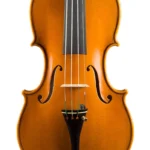
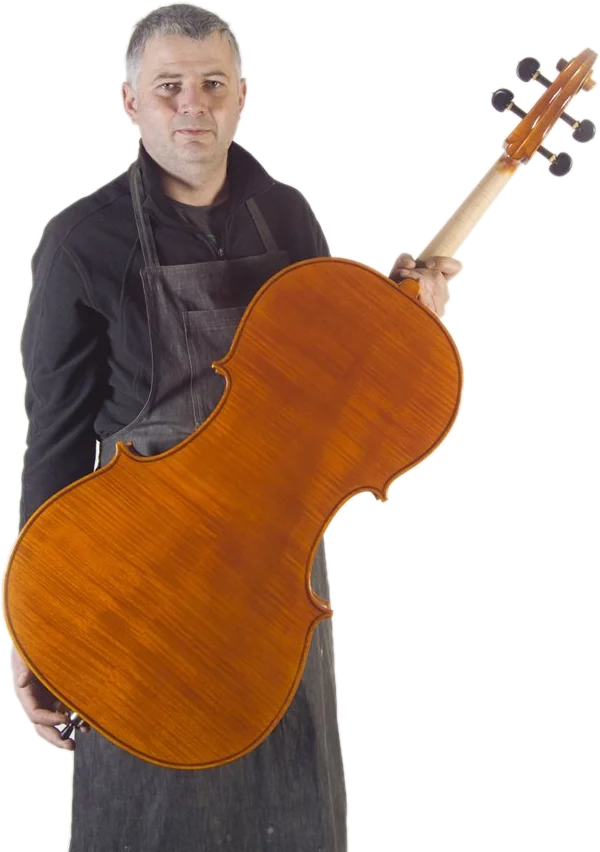
Flamed maple back of a handmade violin
I

The wood

Spruce for the voice, maple for the reflection. Tonewood is chosen by eye, by hand and by ear — tapped, flexed and seasoned for years before the first cut.

A violin family instrument is made from two principal tonewoods. Spruce, light and stiff along the grain, becomes the top — the plate that vibrates and gives the instrument its voice. Maple, denser and often beautifully flamed, becomes the back, the ribs, the neck and the scroll. Each billet is examined for straight grain, even growth rings and the right weight, then tapped to hear how it rings.

  • Spruce
  • Maple
  • Ebony fittings
Luthier gouges on the workshop wall
II

The plates

Top and back are carved and graduated with gouges and finger planes, tenth of a millimetre by tenth of a millimetre, until each plate rings with the right tone.

The arching of top and back is carved by hand with gouges and small finger planes, then the plates are hollowed out from the inside. This “graduation” — the varying thickness across each plate — is checked constantly with callipers, by flexing and by tapping. It is where much of the instrument’s tone is decided, and no two pieces of wood are ever graduated the same way.

  • Gouges
  • Finger planes
  • Callipers
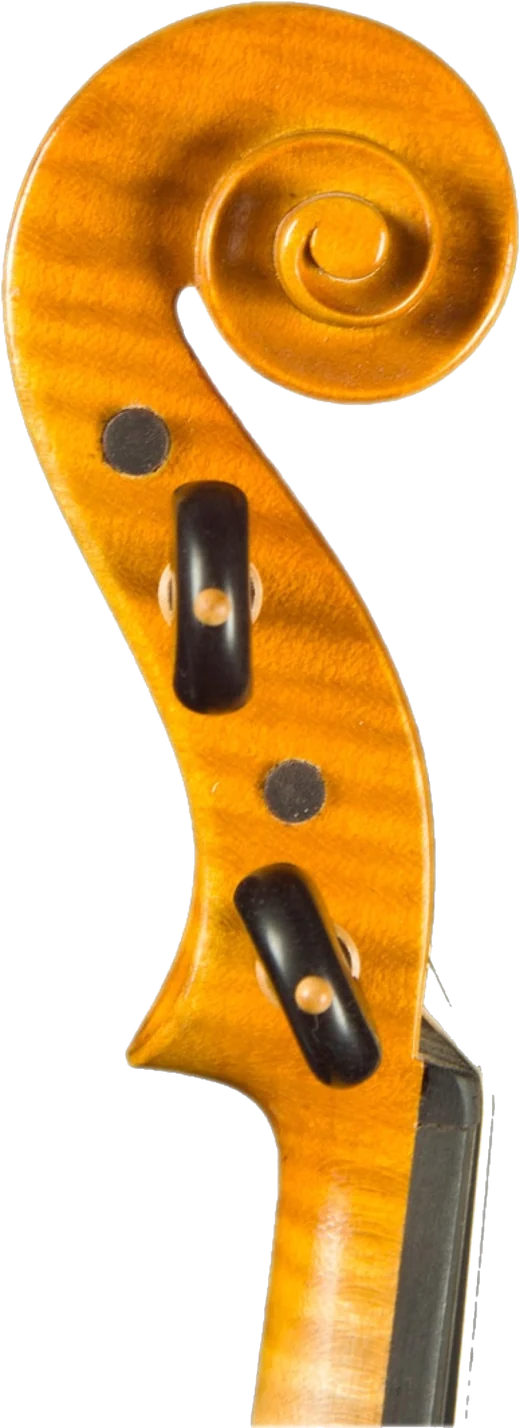
Hand-carved violin scroll
III

The scroll

Carved freehand from a single block of maple, the scroll is the maker’s signature — its spiral reveals the hand behind the instrument.

The neck and scroll are carved from a single block of maple. The volute is cut freehand, turn by turn, and finished with the fine chamfers that catch the light. Because it is the part of the instrument where the maker’s hand is most visible, the scroll is often called the luthier’s signature.

  • A block of maple
  • Gouges
  • Knives
Varnished handmade viola, full view
IV

The varnish

Applied in thin layers and cured slowly, the varnish protects the wood, sets the flame alight and gives the instrument its final colour.

Once the body is assembled and the neck set, the instrument “in the white” receives a ground to seal the wood, followed by many thin coats of varnish. Each coat is left to cure before the next is applied. The varnish protects the instrument, deepens the colour and makes the flame of the maple seem to move as the instrument turns.

  • Ground
  • Thin coats of varnish
  • Time
Profile of a handmade viola showing the arching
V

The voice

Bridge, soundpost and strings: the set-up is where the instrument learns to speak. It is played, adjusted and played again until it answers.

Finally the instrument is set up: the soundpost is fitted inside, the bridge is cut to the arching and the strings are brought up to pitch for the first time. Then it is played, listened to and adjusted — soundpost position, bridge, string height — until its voice is balanced across all four strings.

  • Soundpost
  • Bridge
  • Strings

AnatomiaGlossary

The parts that shape the voice

Some seventy parts make up an instrument of the violin family. These are the ones a luthier thinks about most. Point to a part to find it.

A handmade viola by Gregorio Martini with its parts numbered
1Scroll
The carved volute crowning the pegbox — the maker’s signature.
2Fingerboard
Ebony, planed to a precise curve so the strings speak evenly.
3Top (belly)
The spruce plate that vibrates and projects the sound; its arching and thickness largely define the tone.
4Ribs
Thin maple sides, bent with heat, that join top and back.
5F-holes
The two sound holes; their shape and position influence response and power.
6Bridge
Carved maple that carries the vibration of the strings to the top.
7Tailpiece
Anchors the strings below the bridge; its weight subtly colours the sound.

Unseen, on the back and inside

·Back
Usually maple, often flamed; it reflects and colours the sound.
·Bass bar
A spruce bar glued under the top on the bass side, supporting the low register.
·Soundpost
A small spruce dowel standing inside the body — the “soul” of the instrument (anima, in Italian).

DomandeQuestions

About the making

All questions
01 How long does it take to make a violin by hand?

Building a violin by hand takes many weeks of bench work, followed by the slow layering and curing of the varnish. The timing for each commission is agreed at the very first conversation.

02 Which woods are used for a handmade violin?

Following the classical tradition, the top is carved from spruce, while the back, ribs and scroll are carved from maple — often flamed maple, whose figure shimmers under the varnish. The fingerboard and fittings are usually ebony.

03 What is graduation in violin making?

Graduation is the careful thinning of the top and back plates from the inside, leaving them thicker in some places and thinner in others. It is checked with callipers, by flexing and by tapping, and it decides much of the instrument’s response and tone.

04 What does the soundpost do?

The soundpost is a small spruce dowel standing inside the body, near the treble foot of the bridge. It links top and back and transmits vibration between them; moving it by a fraction of a millimetre changes the sound — which is why Italians call it the “anima”, the soul.

Finale

Let us make an instrument that sounds like you.

Tell Gregorio about your playing, your repertoire and the voice you are searching for. Every commission begins with a conversation.